The email arrives on a Thursday. It is a good email. A conference wants you to speak. Real stage, real audience, exactly the people you have been trying to get in front of for years.
Then the last line- "Please send a profile photo and a short bio by Friday."
You open your camera roll. There is one from a work event, but someone's arm is in it. There is one your partner took at a wedding, which is fine except you are holding a champagne glass. There is the LinkedIn photo, taken in 2019, in a shirt you no longer own, in an office you no longer work in.
You crop the wedding one. You send it. You add a line saying sorry, this is the best I have.
Three weeks later the speaker page goes live and you look at yourself sitting in a grid next to eleven other people, and you think: that is not what I wanted.
The deadline is not the reason
I was at an event a few weeks ago and found myself scrolling the speaker line-up, which is an occupational habit I cannot switch off. Only a handful had a proper profile photo. Most were not doing their job. Cropped out of something else. Shot in a different decade. Lit by whatever was on the ceiling at the time. Each one sitting under a bio describing someone senior running a serious company.
It would be easy to blame the Friday deadline. That is the sympathetic version, and it is not the real one.
The real reason is simpler. Most people have never decided that this is a thing worth spending money on. A lot of them do not know it is a category that exists. Photography gets filed somewhere between a nice-to-have and a vanity purchase, well below the website, the accountant and the CRM. So it never gets budgeted, never gets booked, and gets handled in a panic on a Thursday.
And there is a whole genre of advice online making that easier to justify.
*Just show up as you are. Your people will find you. Post from your phone. Nobody cares what you look like, they care about the value you bring.*
That advice is free, it feels generous, and for some businesses it is completely fine.
It is not fine if you are selling high ticket.
What your photo is actually doing
If your work costs five figures, almost nobody buys it from a form. They look you up first. They read the site, they open LinkedIn, they look at your face, and somewhere in the first few seconds they make a decision about whether you seem like someone at the level they are about to pay for. That decision happens before your first call, and you are not in the room for it.
That is not vanity. That is the sales process, running without you.
Your image is doing that work whether you chose it or not. A photo cropped out of a wedding is still saying something. It just is not saying what you would have picked.
And this is the part people miss. Good quality photographs do not only make you look credible. They make selling easier, they give you something to send. They shorten the gap between someone hearing about you and someone trusting you enough to book a call. They mean the conference, the podcast and the journalist all get something that makes you look like the person your reputation says you are.
So the question is not really whether you need photos.
It is which ones, and how many, and for what.
I just need a headshot
This is how almost every conversation starts. It is a completely reasonable thing to say. Headshot is the only word most people have for this. It is what the conference asked for, it is what LinkedIn calls the picture, and it is the word your accountant would use.
But look at what a headshot actually does. It answers one question. What does this person look like.
That is useful for exactly one box on one page.
So back to Thursday. If that founder had called me in March instead of scrambling in June, my first question would not have been how long do you want the shoot to be.
It would have been this: what are these images for, and where?
That sounds like a technicality. It is the entire answer, and almost nobody starts there.
So write the list.
A website homepage may need one or two strong images and three or four supporting ones, and the hero has to be wide. LinkedIn needs a profile picture and a banner behind it, which are completely different shapes. A speaker profile needs space around your head, because a conference will crop it into their own template and put text over the top. Podcast art has to work as a square at thumbnail size. A pitch deck needs you looking like the person who runs the business. A proposal cover. A press request. Instagram, if you post at all, needs enough variety that you are not running the same photograph in four crops until Christmas.
Be specific. Count them.
One photograph of your face cannot serve that list.
Formats are the smallest part of why. A square will not fill a banner, and a tight portrait cannot be pulled wide without losing your head. True, but easily solved.
The real problem is that those placements do not want the same picture at different sizes. They want different pictures.
So the thing to buy is not a photo. It is an image library you can pull from.
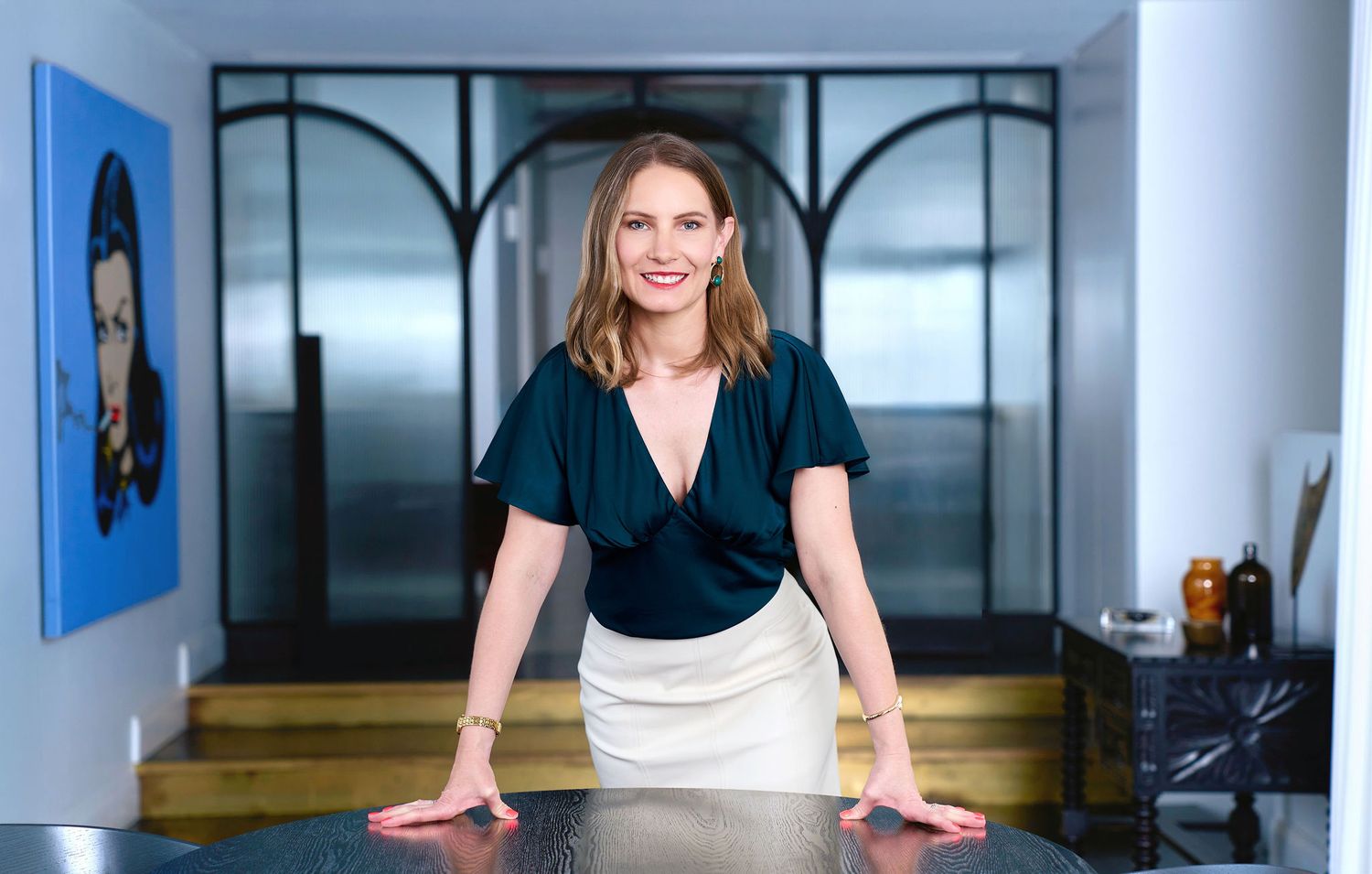
Portraits, yes. But also lifestyle frames where you are working rather than posing. Shots with the tools of your trade in your hands, and shots with nothing in them but you. Something with the product. Wider frames that take in the room, the studio, the workshop, the office, so people can see where you actually operate instead of a face against a wall. Something quieter for a proposal. Something looser for Instagram.
Same person, same day, same session. Completely different images.
That is the difference between a photo you send when asked and a set you actually use.
And that list, not the price and not the clock, is what tells you which session you need.
First, the thing people mix up
There are two different products, and they are not alternatives. One comes after the other.
A branding shoot is the foundation. Research, positioning and a written plan all happen before the camera comes out, and every frame has a destination decided in advance. What you get is a set of images built to hold up for a year across a website, a speaker profile, a pitch deck, press and marketing material.
A content day is the top-up. None of that planning work. It exists for people who have already done the branding shoot, already know what their brand looks like, and simply need more images to keep posting. I run them occasionally, with a few clients sharing one day in a beautiful house.
The order matters. A content day works precisely because the thinking is already done.
So if your website still carries a photo from 2019, that is a branding problem. More content will not fix it.
If your positioning is sorted and you have just run out of things to post, that is a content problem, and you do not need to start again.
Two hours or four hours
Here is the part that gets misread constantly. The difference is not the number of photographs.
The difference is how many different versions of you the images can show.
Two hours gives you one location and one or two looks. Same light, same place, same register throughout. If what you need is a strong, consistent set for a website, LinkedIn and a speaker profile, that is not a compromise. That is exactly the right tool.
Four hours gives you multiple looks, multiple setups, and room for the frames that are not portraits at all. The ones with the product in them. The ones that show the space you work in. The gallery stops being photographs of a person and becomes something you can draw on all year without repeating yourself.
If you post most weeks, that difference matters more than any image count. If you post twice a quarter, it does not.
The honest test: how often will you need a new image over the next twelve months?
If the answer is rarely, two hours is right and spending more is not better.
If the answer is frequent, two hours will run out in months.
Most people underestimate this. Not because they are bad at planning, but because they are thinking about the shoot day rather than the year that follows it.
What you are actually paying for
This is rarely explained, which is why photography pricing looks strange from the outside. The hours on the shoot day are the smallest part of the work.
Before the shoot: a questionnaire, a review of your existing website and social presence, research into what your industry already looks like so your images do not disappear into it, a strategy call, a written proposal, wardrobe direction, and a shot list where every frame has somewhere to go.
After the shoot: selection, colour grading, retouching, delivery.
The shoot itself is the middle.
When you compare two quotes, you are usually comparing what happens around the shoot, not the shoot.
Which is also why "how many images do I get" is a weaker question than it feels. Forty images planned against a brief will beat two hundred that were not, because you will actually use them.
One more thing, because it changes what people book
Almost everyone arrives slightly dreading it. Most people have never been photographed properly and have decided in advance that they will be bad at it.
You will be told what to do, where to look, how to sit and what to do with your hands. Which way to turn your shoulders, and when to inhale and exhale. Continuously, the whole way through.
Nobody needs to arrive knowing how to pose. That part is my job.
So do not book the shorter session because you think you will not last four hours. Book the one that matches the list you wrote earlier.
The summary
Two hours, if you need a strong, consistent set for a website, LinkedIn and a speaker profile, and you are not posting constantly.
Four hours, if you need a library that has to keep working across a year, in multiple looks, with images that do more than show your face.
A team shoot, if the images are for a company rather than a person, and more than one face has to appear. Shot at your office.
A content day, if the branding work is already done and you just need to keep the feed fed. It runs occasionally, and it is not a starting point.
Still unsure? The discovery call sorts it out in about ten minutes, and it happens before anyone commits to anything.
Your photo is selling for you either way.
The only question is what it is saying.
Common questions
How much does a branding photoshoot cost in Sydney?
Studio TingTing branding sessions start at $1,450 for a two hour personal branding session. The four hour session is $3,800. Business branding for teams, shot at your own office, runs $1,250 for two hours, $2,600 for four hours and $3,900 for six hours. Every session includes planning, direction and retouched images.
I just need a headshot for my business. Why would I need more than that?
A headshot answers one question, which is what you look like, and it fills one box on one page. The rest of your business asks for different pictures, not the same picture resized: something with the product in it, something that shows the space you work in, something full length, something you can put text over.
A branding session shoots for that whole list in one day, so you leave with a set to draw on rather than one image you keep resending.
How long should a branding photoshoot be?
It depends on how many different looks you need, not how many photographs. Two hours covers one location and one or two looks. Four hours covers multiple looks and setups, plus the frames that are not portraits, which is what you need if you post regularly.
What is the difference between a branding shoot and a content day?
A branding shoot includes brand research, a strategy call and a written proposal, and produces images built for specific places. A content day has none of that. It is a top-up for people who have already done a branding shoot and simply need more images to post. The branding shoot comes first.
How many photos do I actually need for my website?
Most business websites need one or two strong images plus three or four supporting ones, across the about, services and contact pages. The hero is the one people get wrong. It sits wide across the top of the page, so it has to be shot wide rather than cropped down from a standing portrait.
What photos do I need for a speaker profile or a podcast?
A speaker profile needs clear space around your head, because conferences overlay text and crop to their own template. A podcast needs a square that still reads at thumbnail size. Both are shot deliberately during the session, which is the difference between having one and hunting for something to send.
Do I need professional photos if my business is already doing well?
If you sell high ticket work, your image is part of the sale whether you planned it or not. Buyers look you up before they call. A photograph that does not match the level of the work makes the decision harder for them. It is a sales asset, not decoration.
What if I do not know how to pose?
Nobody arrives knowing how to pose. You are told what to do throughout the session: where to look, how to sit, what to do with your hands, which way to turn your shoulders. Direction is continuous. It is the part of the job that matters most and it is not left to you.
How far ahead should I book?
Ideally before something forces the issue. Most people book after a conference, podcast or journalist has already asked, which leaves no time to plan the images properly. Allow two to three weeks between the strategy call and the shoot, then about two weeks for delivery.