She Makes Videos For A Living. She Still Hated Being Photographed.
Mel Green runs Simply Mel, a content strategy and education business in Sydney. She teaches people how to make video. She is in front of a camera constantly. Her own camera. Alone. No witnesses. Here is what she wrote after her shoot: "I hate being in front of someone else's camera. When I film my videos I'm by myself. No witnesses. So on shoot day, I had more than a few nerves."
This is the part nobody talks about when they talk about content creator photography in Sydney. The assumption is that people who make content are naturally at ease on camera. Often the opposite is true. Controlling your own frame is a completely different skill from handing that control to someone else.
Mel booked the shoot anyway. Here is how it went, and what she said once she saw the gallery.
The Decision: Stop DIY-ing It
Mel had been producing her own brand images for a while. She has the skills. That was never the problem. In her words: "I finally decided to stop DIY-ing everything and invest in some professional brand photos." This is the moment most content creators hit eventually. You can shoot your own images and light them well. What you cannot do is direct yourself, see yourself from the outside, or build a visual argument about your own brand while also being the subject of it.
Mel also had a milestone birthday approaching, so the branding session and a personal milestone portrait session were booked together: three hours total, at Mel's own home.
The Brief: No Corporate Polish
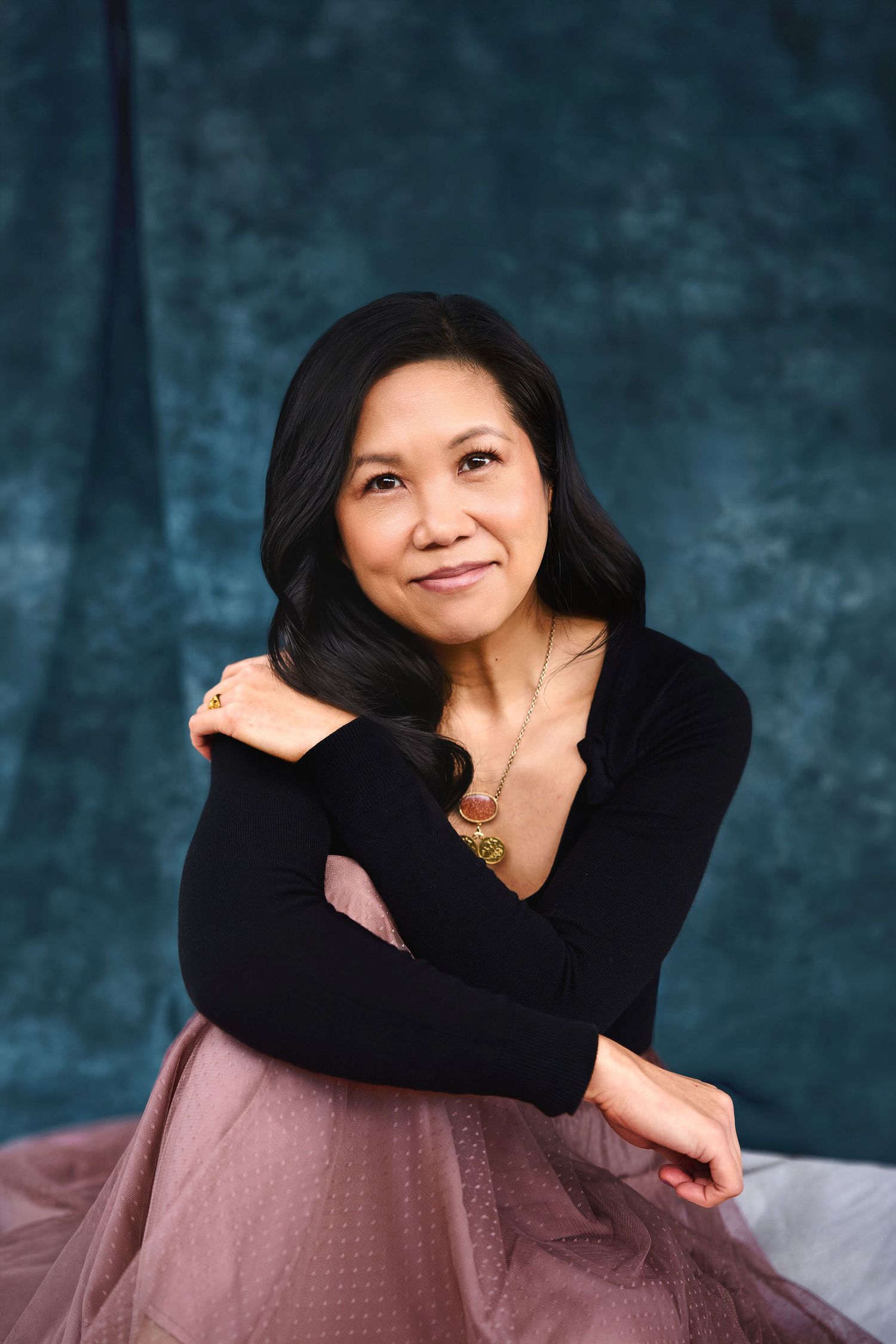
The brand questionnaire came back with one very clear instruction. No corporate polish. No girl boss energy. No stiff poses. No images that look like Mel trying to be someone she is not. What she wanted instead: warmth, personality, and the in-between moments.
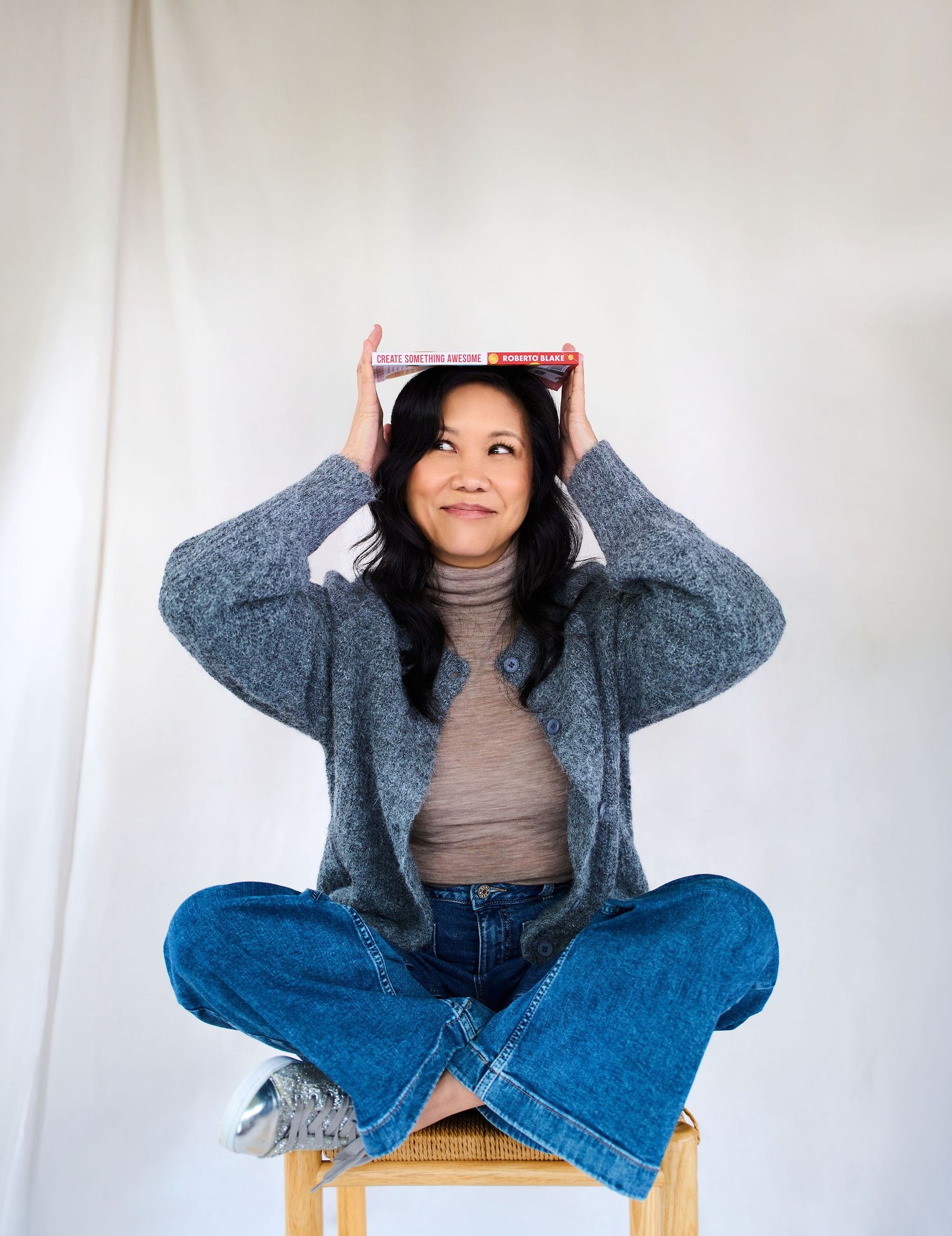
"I particularly love those candid in-between moments that often capture the most personality. I would prefer storytelling and candid moments over obvious personal branding cliches." Mel also described the version of herself she wanted on camera as a mix of four things: playful and humorous, thoughtful and strategic, warm and approachable, confident and experienced. Every shot on the day was planned against one of those four qualities.
The Concept: Shot Inside Her Own World, With Her Own Tools
An early concept for this shoot used hand-crafted cut-out props, a paper phone, a cardboard gimbal, standing in for Mel's real equipment. Mel did not connect with it. It read as too staged for a brief that was explicitly asking for the opposite.
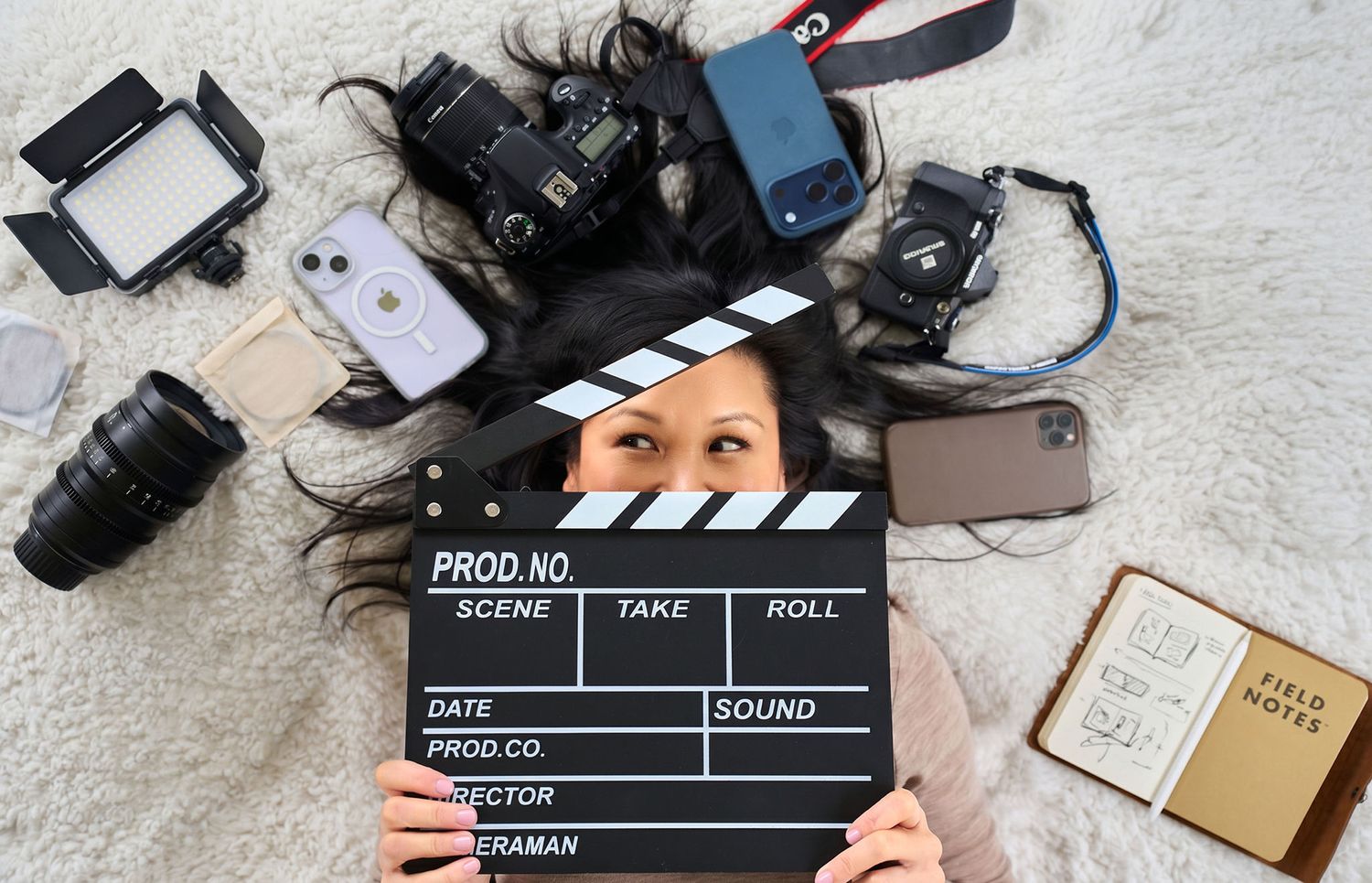
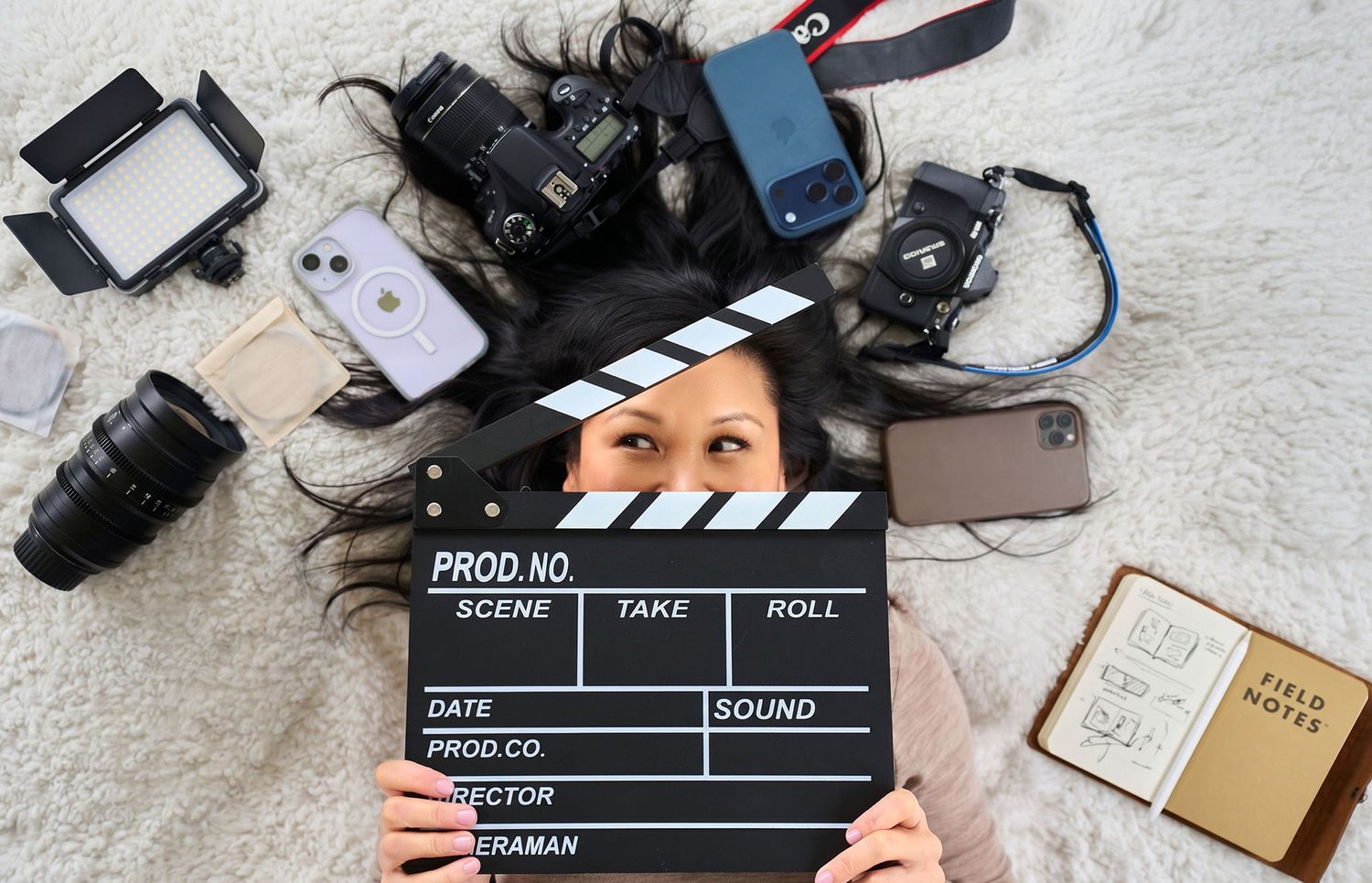
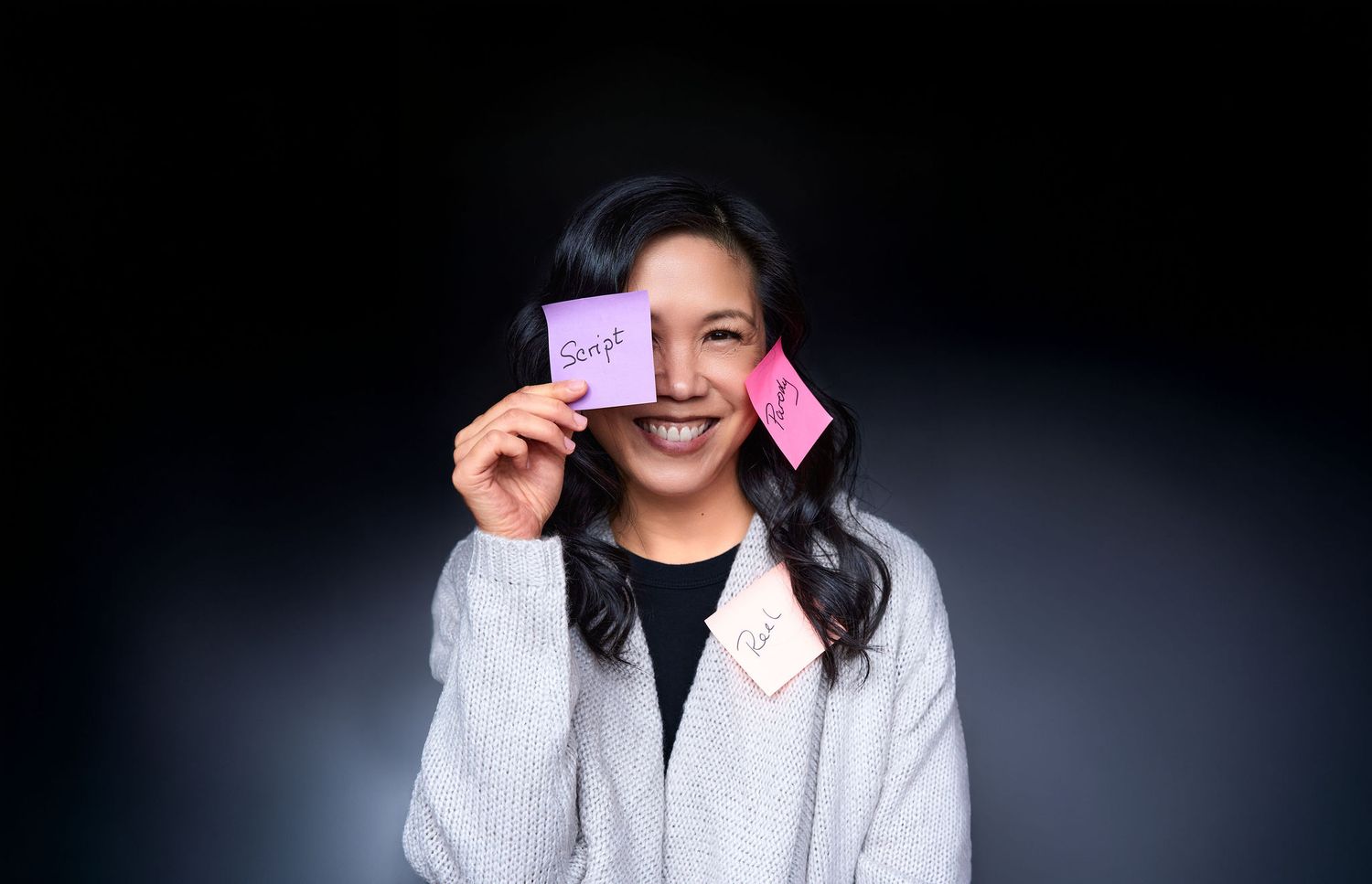
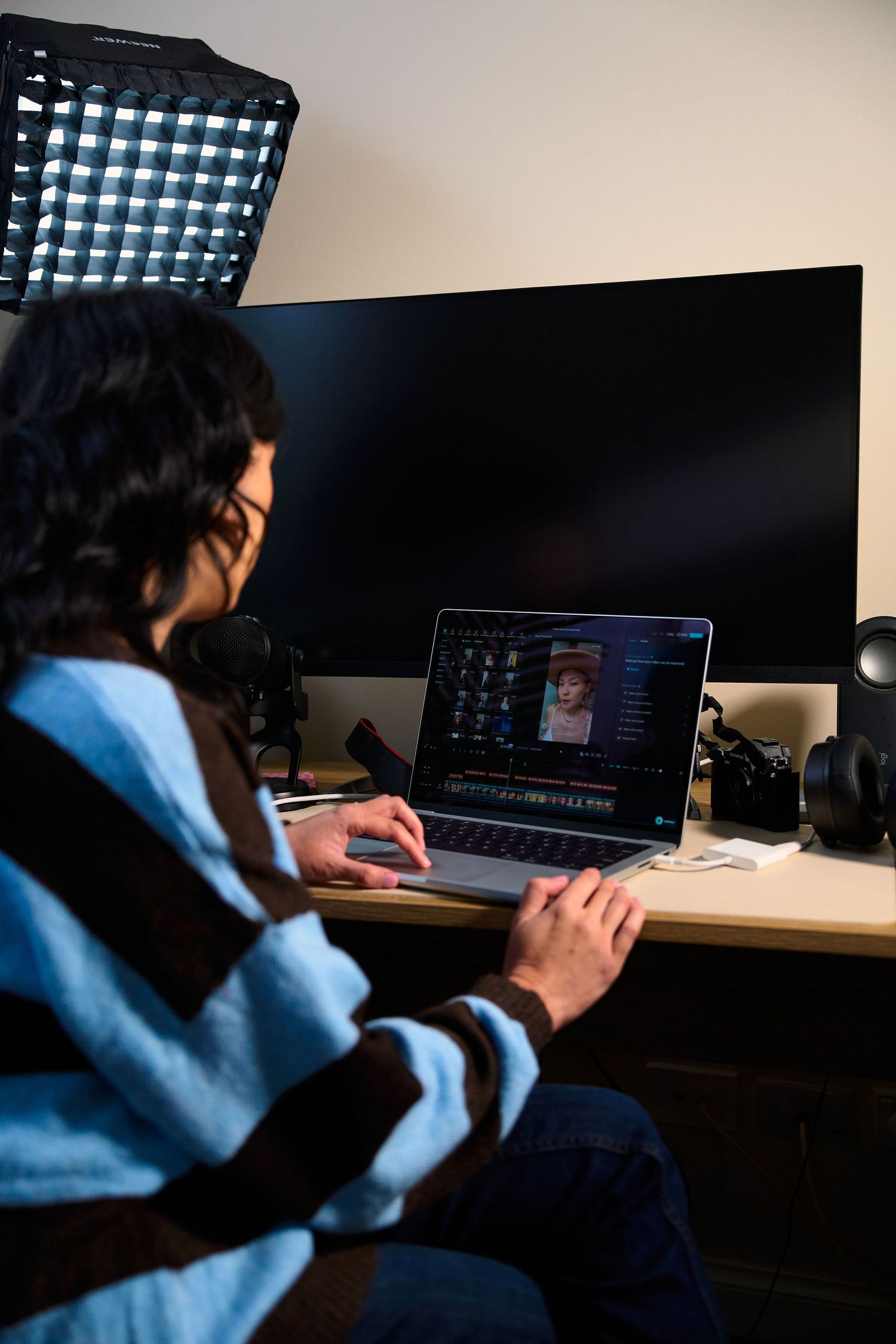
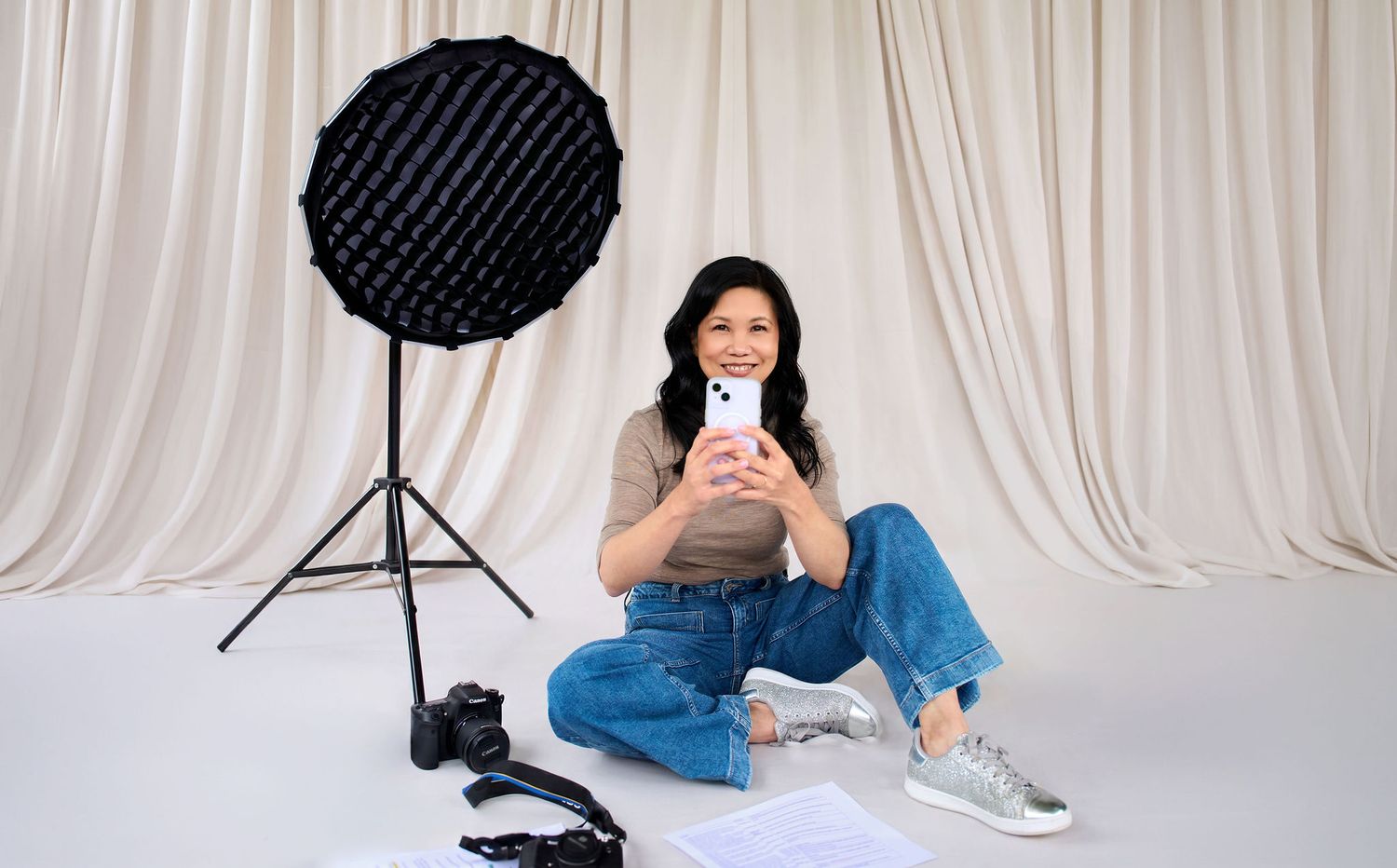
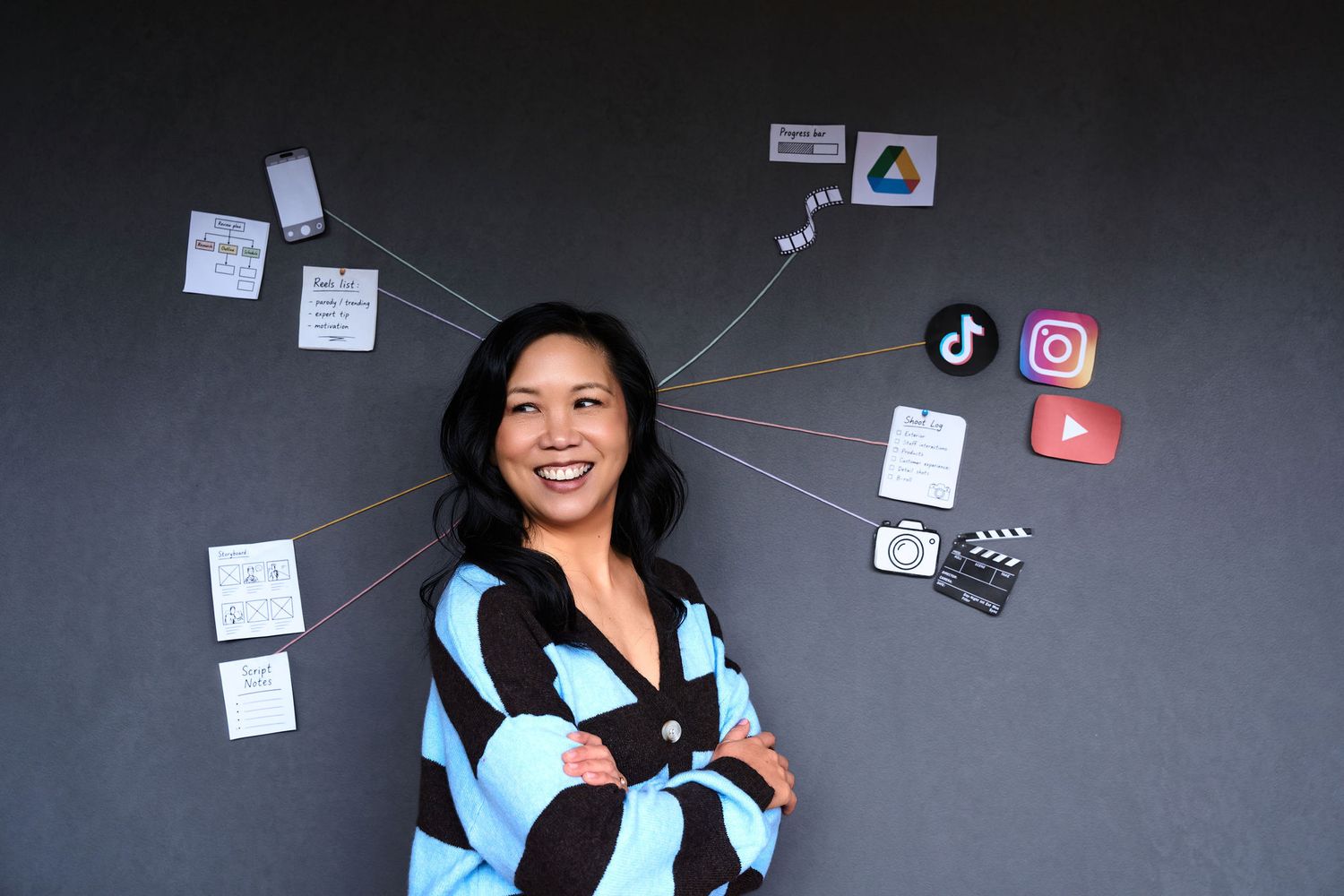
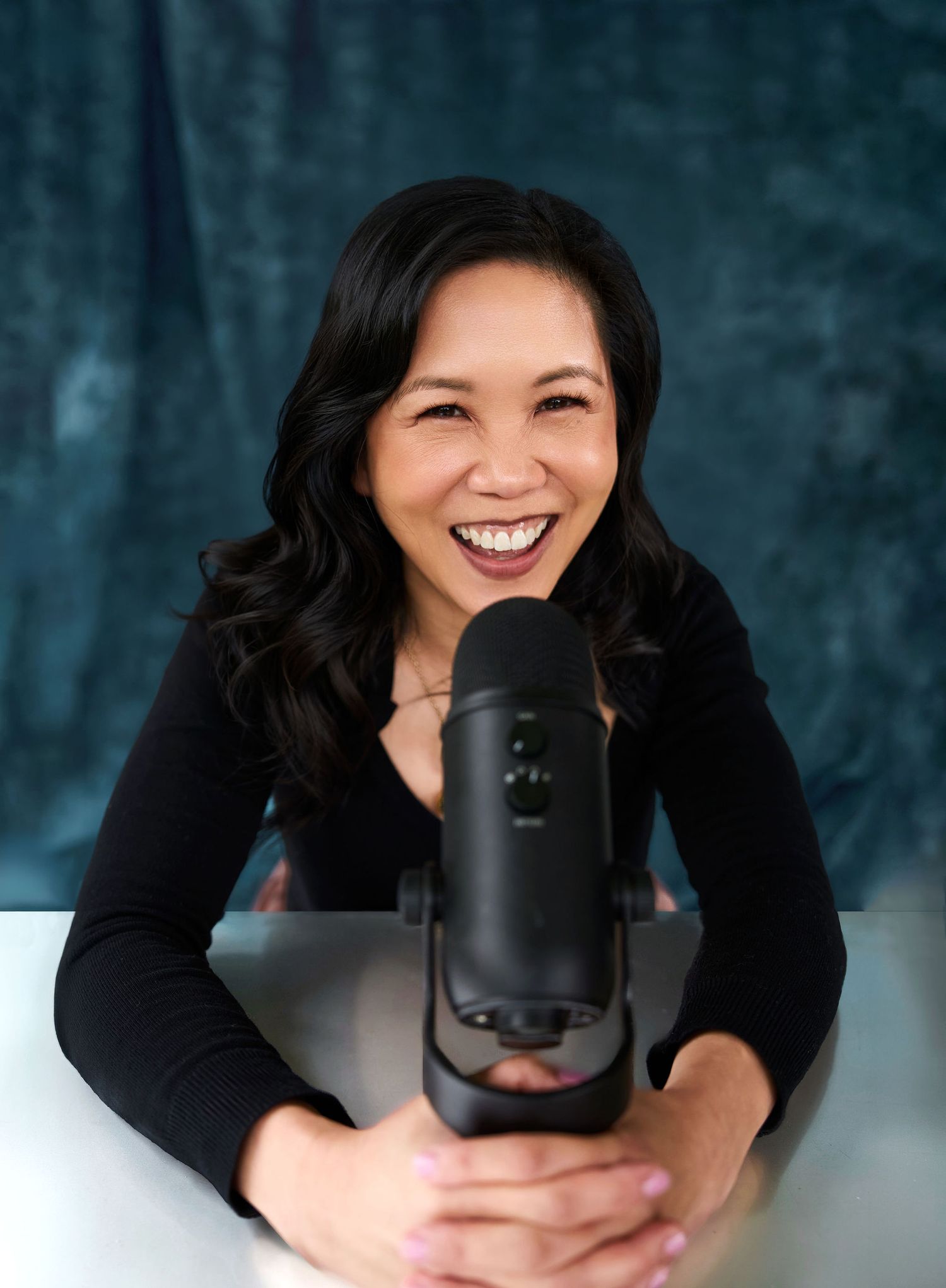
So the shoot moved into Mel's home instead of a studio, and the props became real. Her own camera gear. Her own lights and softbox. Her actual phones. A clapperboard. Her coffee mug, her books, her sticky notes, her content planning board. Nothing constructed. Everything hers.
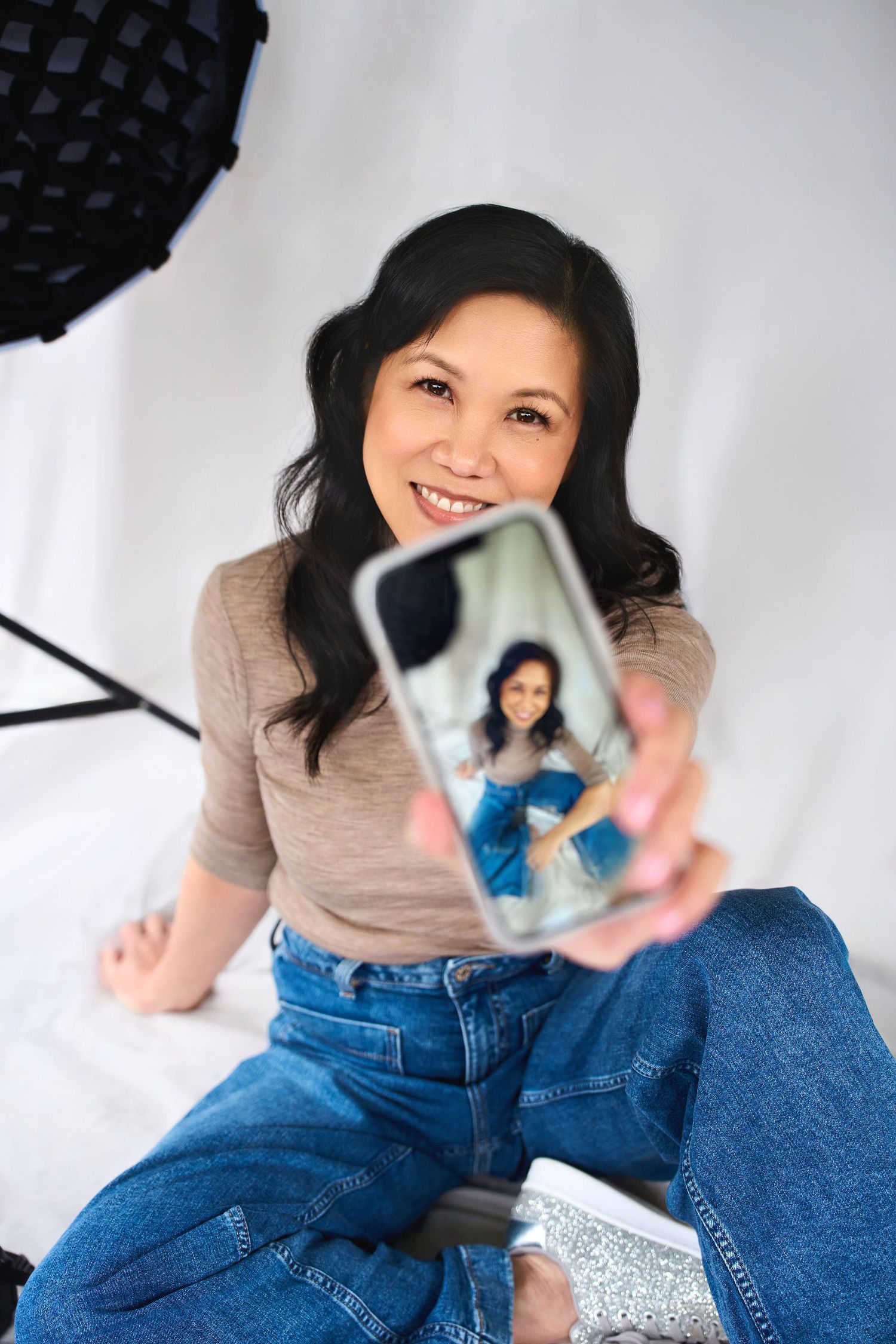
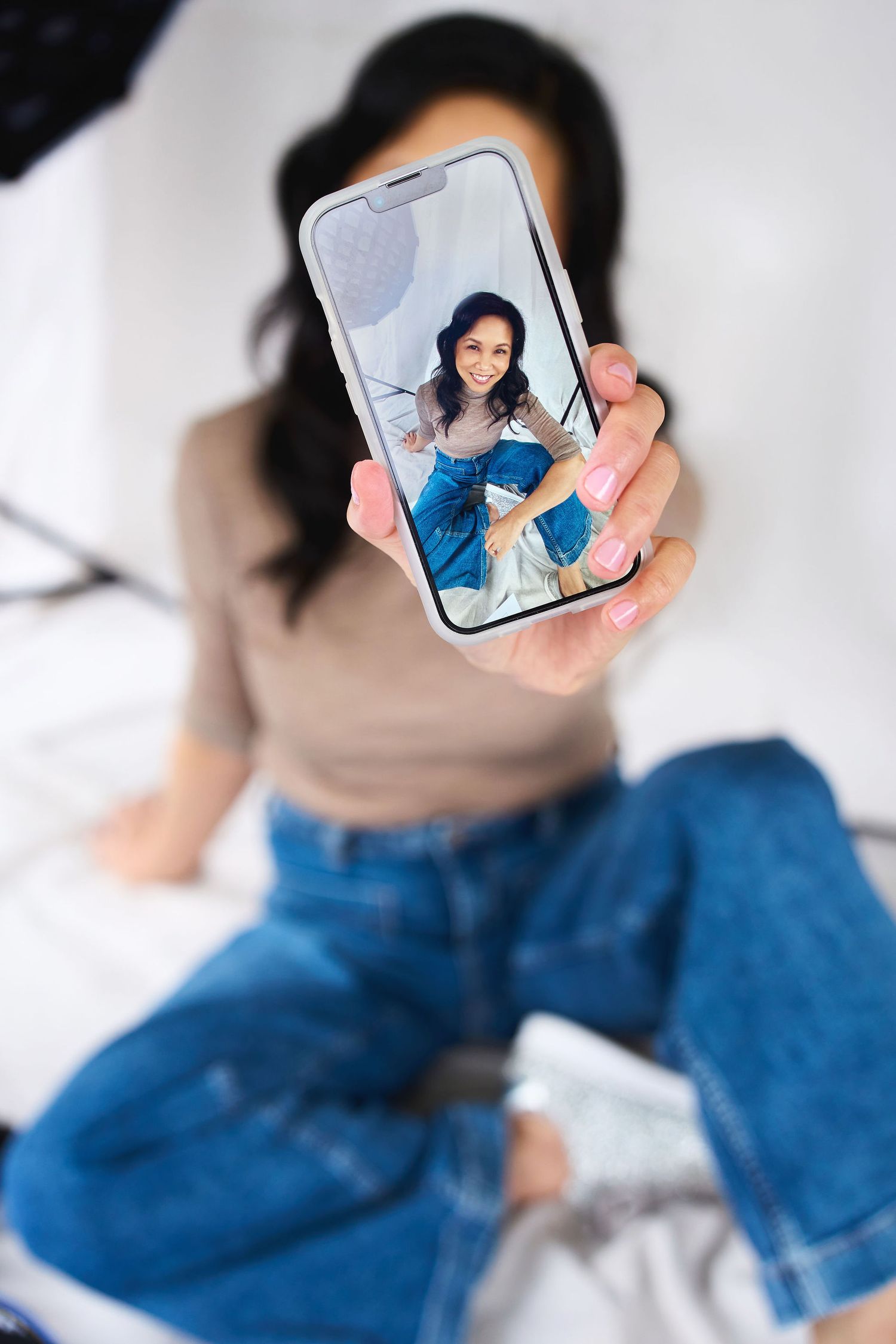
The effect this created is closer to documentary than portraiture. One image shows Mel sitting on the studio floor at home, camera and gear scattered around her, holding up her phone to check a shot. Another shows her behind an actual clapperboard, laughing over the top of it. Another shows her holding her phone up to the lens, the previous portrait visible on the screen: a photo inside a photo, the exact kind of layered, self-referential image a content strategist would actually take.
None of it needed inventing. It was already in her house.
Lighting stayed simple throughout: a single directional source, mostly window light through the curtains in her home office and living room, controlled for soft, real fall-off rather than flat studio light. The composition leaned on the architecture already in the house: doorway arches, the staircase railing, sliding door frames, a window grid on the balcony. The goal was never to build a set. It was to notice the one Mel already lived in.
Alongside the close, prop-led shots, part of the shot list was deliberately framed wide, in landscape, with no props in the shot at all. This solves a problem most content creators do not know they have until they are trying to use their photos. A tight, prop-filled portrait looks great as a single image, but it leaves no room to add text, a logo, or a graphic over the top. A wide landscape frame with clean, uncluttered space gives Mel images she can actually build on: a quote card, a course title, a website banner with copy sitting over the photo rather than fighting it. That gap, having photos that look good but cannot be used for anything beyond themselves, is one of the most common complaints content creators have about their existing photo libraries.
The Day: Nerves, Direction, And A Blooper Reel
Mel was nervous, and had also had a difficult personal week going in. None of that is a problem on the day. It is the job. She put it plainly in her Google review afterwards: "Stepping in front of someone else's camera felt really vulnerable, but Tammy met me exactly where I was and quickly put me at ease. She gave precise direction, paid attention to every tiny detail and knew exactly what needed adjusting to get the shot."
Direction is the thing. Nobody should have to arrive already knowing how to pose. That is not the client's job. The shot list exists so there is always a next instruction, and the client never has to stand there wondering what to do with their hands.
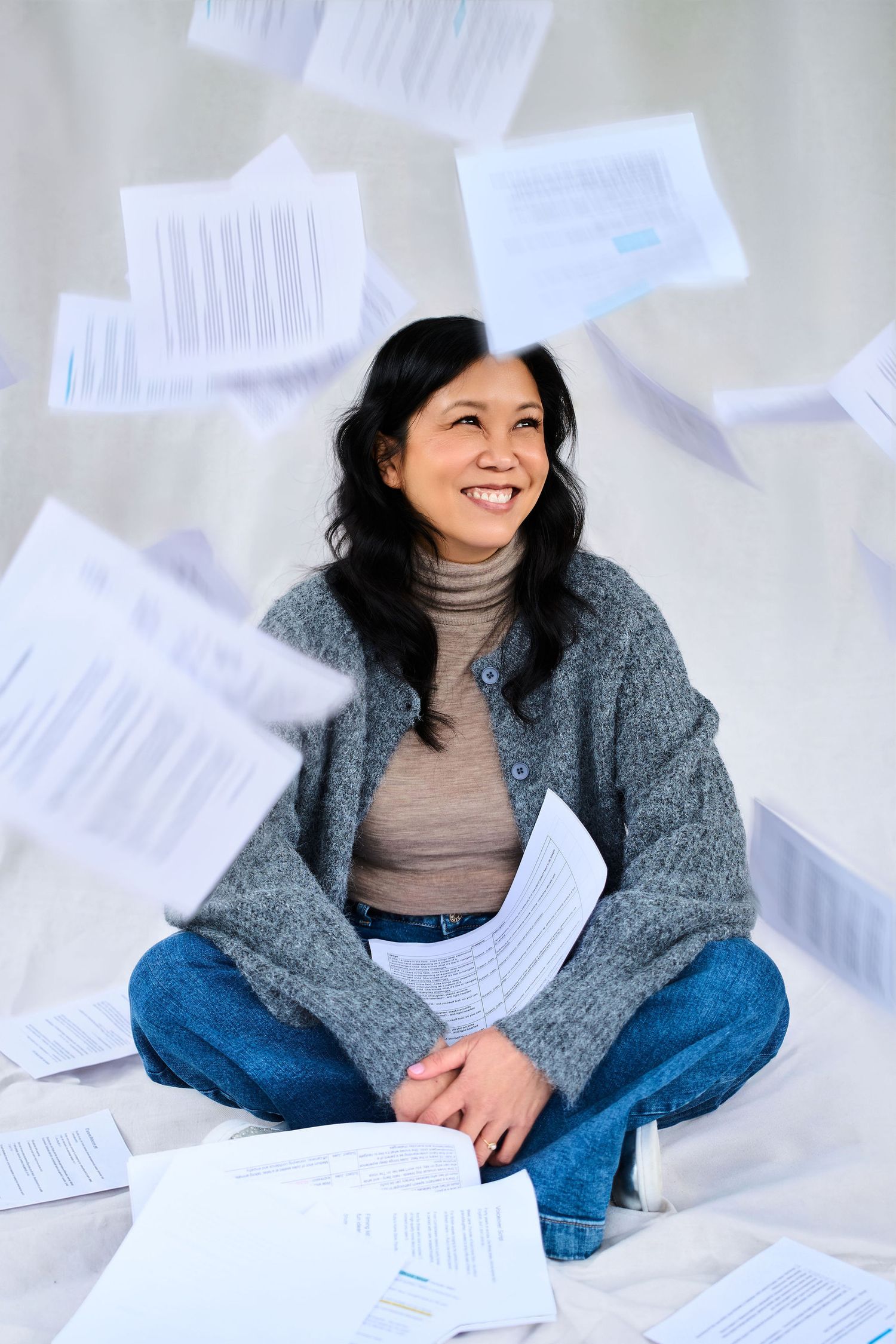
Hair and makeup happened on-site at Mel's home with Adriana, who Mel described afterwards as the best cheerleader and paper tosser on the day. Her husband also turned up mid-shoot to check how it was going. That made the blooper reel.
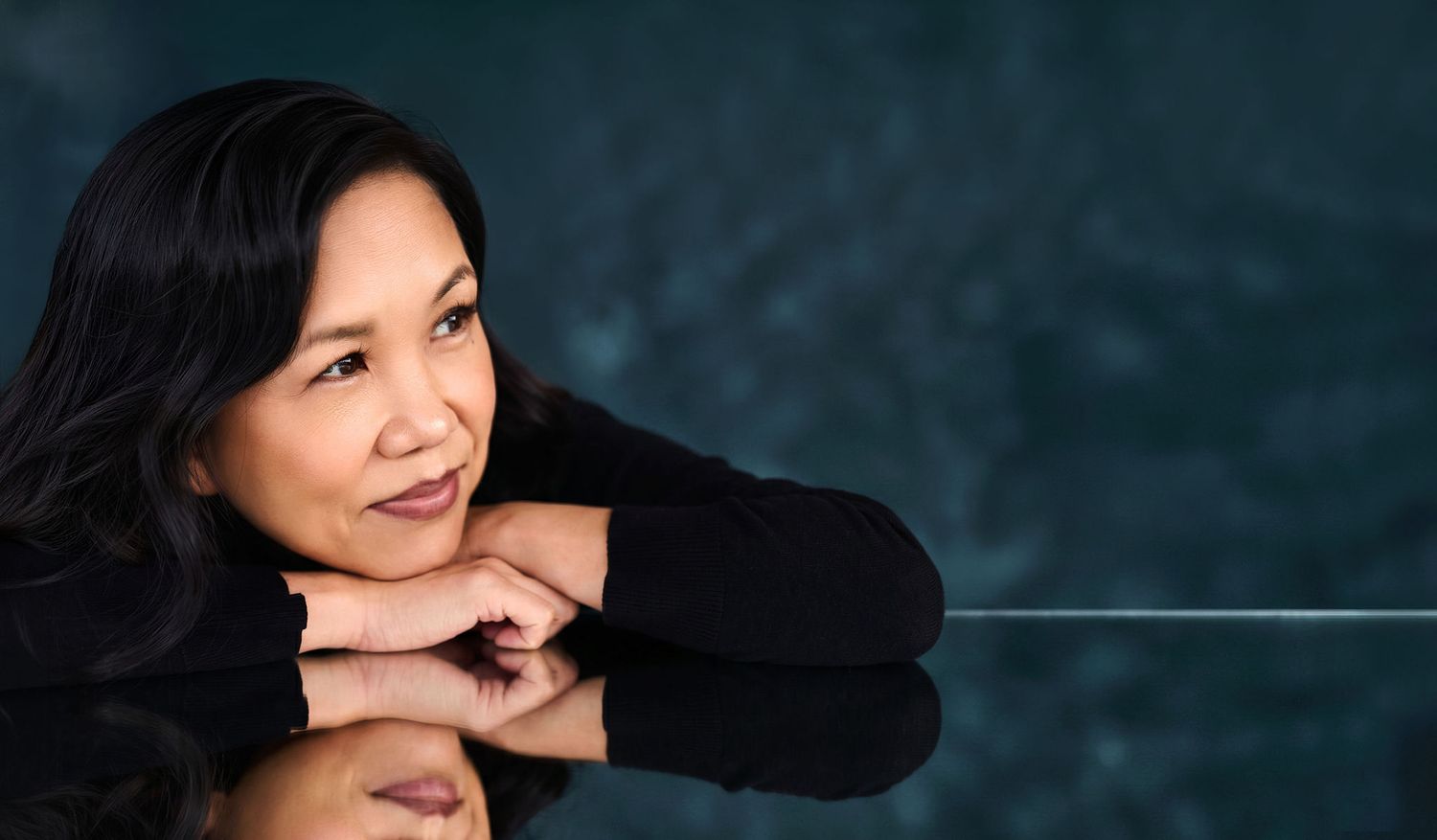
The milestone portraits, held separately, shifted the whole register: feminine, cinematic, soft. An oversized white shirt, one motion-blur black-and-white frame of Mel mid-turn, hair caught moving. Completely different mood from the branding sets, on the same afternoon, in the same house.
What Mel Said When She Saw The Gallery
Mel sent a voice note the day the gallery landed. Some of it, unedited: "I'm not sure what to say. Oh my gosh, you're a freaking magician. I'm so happy... I actually look good in them, and the background looks good, and the motion. I don't have any feedback, really. I don't think we need any changes. I think everyone I know is gonna be super jealous of how good my photos are for my business."
"I've been telling everyone I know about you, because honestly, why would you not go to the best?"
Her Google review said the same thing with more polish: "Every aspect of the shoot was thoughtfully planned well before shoot day, including outfits, props and the overall vision. Tammy's creativity is exceptional, and she brought ideas I never would have thought of. I arrived knowing exactly what we were creating. I love my final gallery. I now have a beautiful collection of images that feel authentically me, along with a solid library of professional assets I'll be using across my website, social media and marketing. It's by far one of the best investments I've made in my business."
Mel also flagged something worth repeating to any photographer: she'd seen a reel saying the biggest compliment a client can give a photographer or video editor is changing their profile picture to the new images. She changed hers within mins.
The Result: A Gallery That Gets Used
Mel's images are now across her profiles, her Instagram, and inside her own video content as stills and thumbnails. She filmed behind-the-scenes footage on the day and turned the shoot itself into content. That is the actual measure of a brand shoot working. Not how the images look in isolation. How many places they end up running, and whether the client changes their profile picture without being asked to.
What This Means If You Make Content For A Living
If you produce your own video and still feel strange being photographed by someone else, that is common and it gets handled on the day with direction, not solved before you book. If you have been DIY-ing your brand images, the gap is usually not technical quality. It is that you cannot direct yourself and build your own brand argument at the same time.
And if the most authentic version of your brand is already sitting in your own home, in your own equipment, in the way you actually work, the shoot does not need to invent a concept. It needs to notice one.
FAQs: Content Creator Photography in Sydney
What is content creator branding photography?
Content creator branding photography is a strategic session that produces a full image library for a creator's digital presence: website, social profiles, course pages, speaker kits, reel covers, and ad creative. It starts with a brief that aligns the images with the creator's specific message and audience, not just a set of portraits.
I make videos for a living but hate being photographed. Is that normal?
Yes. Controlling your own frame is a completely different experience from being directed by someone else. Mel Green teaches video content and still arrived at her shoot nervous, describing it in her Google review as "really vulnerable." Every Studio TingTing session includes a shot list and continuous direction on the day, so you are never left to work out what to do on your own.
Can a content creator branding shoot happen at home instead of a studio?
Yes. Mel Green's session was shot entirely at her own home, using her actual equipment, desk, and content-creation tools as props, with the architecture of the house itself used for composition. A home setting can produce a more authentic result than a studio backdrop when the brief calls for real, in-context storytelling rather than a constructed set.
How is a branding shoot different from taking my own content photos?
Producing your own images means directing yourself while also being the subject. A branding shoot separates those roles. It also starts with a strategy call and a shot list where every frame is assigned a purpose in advance, so the gallery covers every platform you need rather than variations of the same shot.
How long does a content creator photography session take in Sydney?
Mel Green's combined branding and milestone session ran three hours in total, covering four to five branding looks and two milestone looks. Session length is scoped during the strategy call based on how many sets and outfit changes the brief needs.
Can I film behind-the-scenes content during my shoot?
Yes. Mel filmed BTS footage throughout her session and published it as Instagram reels afterwards.
Why do my brand photos never seem to work for social graphics or website banners?
This usually comes down to framing, not the quality of the photo. A tight portrait with props filling the frame looks strong as a single image but leaves no space to add text, a logo, or a graphic over the top. Mel's shot list deliberately included wide, landscape frames with no props in shot, giving her clean space to layer quote cards, course titles, or banner copy over the image later. This is one of the most common gaps in a standard photo library, and it is solved at the shot list stage, not in editing.
How much does a content creator branding shoot cost in Sydney?
Studio TingTing's Signature Session for personal branding photography starts from $1,450 for a two-hour session with 15 retouched images. Every session includes a brand questionnaire, pre-shoot strategy call, mood board, wardrobe guidance, shot list, and creative direction on the day.
Who should book a content creator branding session?
Content creators, educators, and strategists whose brand has a clear point of view that their current images do not communicate. If your photos could belong to anyone in your category, that is the gap the session addresses.
Ready to build an image library that does a job? Book a strategy call with Studio TingTing
Studio TingTing is a Sydney personal branding and commercial photographer working with content creators, educators, founders, and brands across Sydney and New South Wales.